
Tips for a Tidy Closet That Stays Organized
Start With a Simple Closet Reset
A tidy closet begins with a clear view of what you own. Instead of trying to organize everything at once, set aside enough time to remove your clothes, shoes, and accessories from the space. Working with an empty closet makes it easier to clean, measure, and rethink how each item should be stored.
Place everything in one area, such as your bed or a clean floor. Then wipe down shelves, vacuum the floor, and dust the corners. A clean space gives you a fresh starting point and helps prevent dirt from being tucked away with your belongings.
Before putting anything back, sort your items into a few clear groups:
- Keep and wear often
- Keep but wear occasionally
- Repair or alter
- Donate or give away
- Recycle or discard
Try not to make decisions based only on how much an item cost. Consider whether it fits well, feels comfortable, suits your current lifestyle, and has been worn recently. If you are unsure about something, place it in a separate “maybe” pile and review it again after the main sorting is finished.
Use Your Closet Space Intentionally
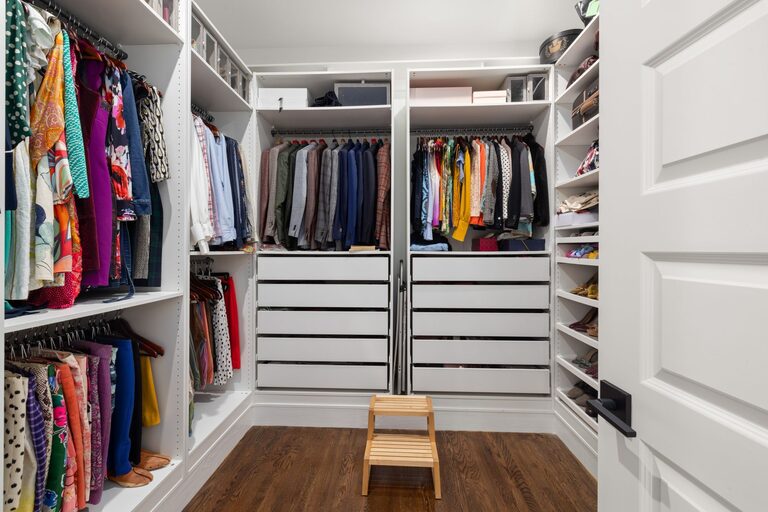
Once you know what you are keeping, divide your closet into practical zones. Grouping similar items makes it easier to find what you need and return it to the right place.
For example, you might create sections for:
- Work or dress clothes
- Casual tops and bottoms
- Outerwear
- Exercise clothes
- Shoes
- Bags and accessories
Keep the items you use most often at eye level or within easy reach. Less frequently used clothing can go on higher shelves, while seasonal items can be stored toward the back or in a separate container.
If your closet has limited hanging space, use it for pieces that wrinkle easily or are difficult to fold. Sweaters, jeans, T-shirts, and pajamas can often be folded or stored in drawers. This leaves hanging space available for dresses, jackets, shirts, and other garments that benefit from being hung.
Choose Storage Tools That Fit Your Needs
Storage products can help, but they should support your habits rather than create extra work. Measure your shelves, drawers, and hanging areas before buying organizers. This prevents you from purchasing items that do not fit or leave unused gaps.
Useful options may include:
- Matching hangers to create a neat, consistent look
- Drawer dividers for socks, belts, and small accessories
- Stackable bins for seasonal clothing
- Shelf dividers for folded items
- Hooks for scarves, bags, or frequently used accessories
- Shoe racks or clear boxes to keep footwear easy to see
Avoid filling every shelf and container completely. Leaving a little open space makes it easier to put things away and prevents clothing from becoming compressed or messy.
Fold Clothes in a Way That Works for You
There is no single correct folding method. The best approach is the one that lets you see your clothes and reach them without disturbing the rest of the stack.
For drawers, try folding items into compact rectangles and placing them upright in rows. This makes each piece visible instead of hiding most of your clothes beneath the top layer. For shelves, create small stacks by category, such as short-sleeved shirts, sweaters, or workout clothes.
Avoid making stacks so high that they fall over when you remove one item. If a pile is difficult to manage, divide it into two smaller groups or use a shelf divider.
For bulky items, such as winter sweaters, allow extra space so they keep their shape. Overcrowding can lead to wrinkling and make the closet harder to maintain.
Make Shoes and Accessories Easy to Find
Shoes and accessories can quickly make a closet look untidy because they come in many shapes and sizes. Give each type of item a specific home.
Keep frequently worn shoes near the closet entrance or on a low rack. Store special-occasion shoes higher up or toward the back. If you use boxes, label them or choose clear containers so you can identify the contents without opening each one.
For accessories, group items by type. Small baskets can hold scarves, hats, or gloves, while hooks can keep bags visible and accessible. Jewelry and hair accessories may be easier to manage in a shallow drawer organizer.
Try to avoid storing too many small items in one large container. When everything is mixed together, finding one item can create a new mess. Smaller categories make it easier to put things back correctly.
Use Labels and Simple Visual Cues
Labels are especially helpful when several people share a closet or when items are stored in closed bins. Label containers by category, season, or family member. Keep the wording short and easy to understand.
Visual cues can also make organization more natural. For example, place everyday clothes on one side and special-occasion items on the other. Arrange clothing by type first and then by color if that helps you choose outfits more quickly.
Color sorting is optional, but it can make a closet look calm and make specific items easier to locate. The main goal is not to create a perfect display. It is to make your storage system simple enough to use every day.
Create Habits That Keep the Closet Tidy
A closet stays organized through small, consistent actions rather than occasional major cleanups. Choose habits that take only a few minutes.
Try these simple routines:
- Return clothes to their assigned spot after wearing or washing them.
- Hang up items that wrinkle easily as soon as laundry is finished.
- Place worn clothes in a hamper instead of on a chair or the floor.
- Keep a small basket for items that need repairs or alterations.
- Remove empty hangers and return them to one location.
- Spend five minutes each week putting away anything out of place.
A one-in, one-out rule can also help control the amount of clothing you own. When you buy or receive a new item, consider whether an older item should be donated or removed. This is not about replacing everything immediately. It is simply a reminder to keep the total amount manageable.
Review Your Closet by Season
At the beginning or end of each season, take a few minutes to review your closet. Move clothing that is unlikely to be used soon into labeled bins or a less accessible area. As you handle each item, check for stains, loose buttons, missing pairs, or other repairs.
Seasonal reviews are also a good time to notice what you are not wearing. If an item remains untouched year after year, it may be taking up useful space without serving a purpose.
Do not feel pressured to create a completely empty closet. A useful closet can contain clothing for different activities and occasions. The goal is to make every item easy to store, find, and use.
Keep the System Flexible
Your closet organization should change as your routines change. A system that worked during one season or stage of life may need adjustment later. If you regularly leave certain items on a chair, shelf, or doorknob, that may be a sign that their assigned storage spot is inconvenient.
Instead of blaming yourself for the clutter, adjust the system. Move frequently used items closer, add a hook, or create a more practical category. The best closet is not the one that looks perfect all the time. It is the one that makes everyday organization feel easy.
With a thoughtful setup, suitable storage, and a few repeatable habits, your closet can stay tidy with much less effort. Start small, keep the categories clear, and make your system work for the way you actually live.