
Easy DIY Ideas for Beautiful Wall Decor
Wall decor can change the look and feel of a room without requiring a large budget or advanced crafting skills. With a few basic supplies and some creativity, you can make artwork, displays, and useful decorations that reflect your personal style.
Whether you want to fill an empty wall, update a small corner, or add warmth to a rental home, these easy DIY wall decor ideas are simple to customize. Many projects use materials you may already have at home.
1. Create a Gallery Wall
A gallery wall is an easy way to display art, photographs, postcards, and meaningful objects in one organized arrangement. It can be formal and symmetrical or relaxed and eclectic.
What you need
– Picture frames in different sizes
– Family photos, prints, or postcards
– Paper and pencil
– Measuring tape
– Removable wall hooks or picture hangers
Start by choosing a theme or color palette. You might use black-and-white photos, botanical prints, travel memories, or artwork in similar shades. Before hanging anything, arrange the frames on the floor to test different layouts.
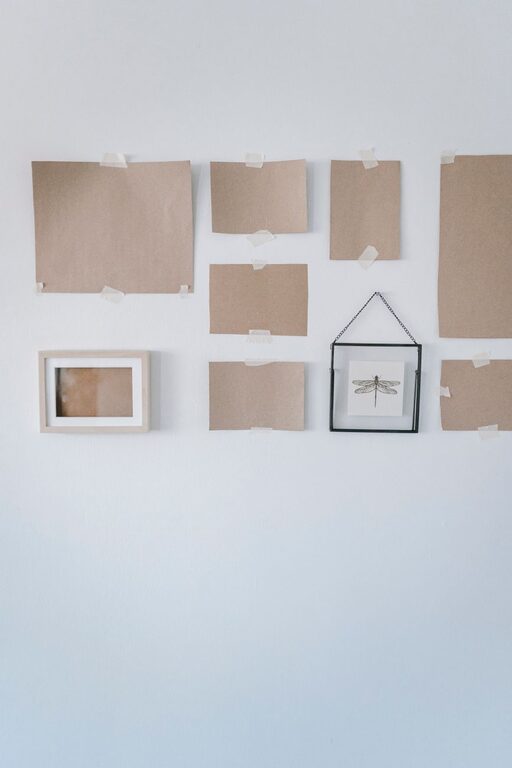
Trace each frame onto paper and cut out the shapes. Use painter’s tape to attach the paper templates to the wall. This lets you adjust the arrangement before making holes. Leave a consistent amount of space between frames for a neat appearance.
For a more casual look, mix frame finishes and sizes. For a modern display, use matching frames and a balanced grid.
2. Make a Framed Fabric Display
Fabric can add color, pattern, and texture to a wall. A beautiful scarf, vintage textile, or fabric remnant can become artwork with very little effort.
Choose a frame that is slightly larger than the fabric. Remove the backing and place the fabric over a piece of acid-free cardstock or foam board. Smooth out wrinkles, then secure the edges on the back with double-sided tape or fabric glue.
Place the fabric inside the frame and hang it where the pattern can be enjoyed. This idea works especially well in bedrooms, reading corners, and entryways. You can also use several small frames to create a coordinated collection.
3. Build a Simple Hanging Plant Display
Plants bring natural color and shape to plain walls. If floor space is limited, a wall-mounted plant display can be a practical and decorative solution.
Install a sturdy wooden shelf or a set of wall hooks. Add small pots, hanging planters, or glass containers with low-maintenance plants. Choose plants with different leaf shapes to create visual variety.
Before installing the display, check the weight limits of the shelf and wall hardware. Place a tray beneath pots that may drip, and avoid positioning plants where they could block walkways or windows.
For a low-maintenance alternative, use dried flowers, preserved greenery, or realistic artificial plants.
4. Design a Painted Geometric Accent
You do not need to paint an entire wall to make a noticeable change. A simple geometric design can create the appearance of custom artwork.
Choose two or three colors that work well with the room. Lightly mark triangles, arches, blocks, or half circles with a pencil. Use painter’s tape to outline the shapes, pressing the edges firmly to reduce paint bleeding.
Apply thin coats of paint and allow each coat to dry before adding another. Remove the tape while the final coat is still slightly soft. This can help create cleaner edges.
For a subtle effect, use different shades of the same color. For a bold statement, combine contrasting colors on a small section of wall behind a desk, bed, or console table.
5. Make a Decorative Wall Hanging
A wall hanging made with yarn, rope, or fabric strips adds softness and texture to a room. It is also easy to adapt to different styles.
Basic materials
– A wooden dowel or smooth branch
– Yarn, cotton cord, or fabric strips
– Scissors
– Measuring tape
– String for hanging
Cut several lengths of yarn or cord. Fold each piece in half and attach it to the dowel with a simple loop. Arrange the strands in rows or trim the bottom into a V shape, curve, or angled pattern.
You can add wooden beads, ribbon, or colored strands for extra detail. Keep the design neutral for a minimalist look, or use several colors to brighten a child’s room or creative space.
6. Turn Everyday Objects Into Wall Art
Some of the most interesting wall decor starts with ordinary household items. Baskets, hats, plates, cutting boards, and woven trays can all become part of a decorative display.
Gather objects with related colors or materials. Arrange larger pieces first, then fill open spaces with smaller items. Lay everything on the floor before hanging it to make sure the composition feels balanced.
Use appropriate hooks or mounting hardware for each object. Heavy pieces should be attached to a wall stud or supported with hardware designed for their weight. Avoid placing fragile items above seating or in busy walkways.
7. Create a Magnetic Art Wall
A magnetic display makes it easy to change artwork, notes, and photos whenever you like. This is especially useful in home offices, kitchens, and creative areas.
One option is to mount a large metal sheet inside a simple frame. Another is to use magnetic paint beneath a decorative topcoat. Add magnets that match the room’s style, such as wood, brass, or colorful shapes.
Display calendars, children’s drawings, recipes, inspirational words, or favorite postcards. Keep the arrangement organized by using a limited number of items and leaving some open space.
8. Add a DIY Floating Shelf
A floating shelf provides both decoration and storage. It can hold framed prints, small plants, candles, books, or collected objects.
Choose a shelf length that fits the wall without making the area feel crowded. Install it at eye level or above furniture, leaving enough space for objects underneath if needed.
For a layered display, place taller items toward the back and shorter pieces near the front. Combine different shapes and textures, but repeat one or two colors to keep the arrangement cohesive.
Tips for Successful DIY Wall Decor
Keep these simple guidelines in mind before starting:
– Measure the wall and available space first.
– Choose a color palette that complements nearby furniture.
– Test layouts on the floor or with paper templates.
– Use removable hooks when appropriate, especially in rental homes.
– Select hardware based on the weight of the finished decor.
– Leave some empty space so the wall does not feel crowded.
– Mix textures, such as wood, fabric, metal, and paper.
– Step back often to view the project from across the room.
Make Your Walls Feel Personal
The best wall decor does not have to look perfect or expensive. A collection of favorite photos, a handmade hanging, or a shelf filled with meaningful objects can make a room feel more welcoming.
Start with one small project and build from there. By combining useful materials, thoughtful placement, and a few personal details, you can create wall decor that adds character to your home and remains easy to update over time.